 Camera
  Display
  Battery
  Smartphone
  Security
  DSLR & Mirrorless
  Tv Screens
  Automotive
  Medical
  3D Camera
  Industrial Vision
  Computing
  AR / VR
  Drone & Action camera

Test protocol document
scenes, lighting conditions, KPI weights, and shooting plan

KPI-driven ISP tuning and validation services
ISP tuning is one of the most resource-intensive phases of camera development. Without a structured measurement framework, optimization cycles become subjective, iterations accumulate, and target convergence is slow.
ISP tuning is one of the most resource-intensive phases of camera development. Without a structured measurement framework, optimization cycles become subjective, iterations accumulate, and target convergence is slow. DXOMARK ISP Tuning Services solves this by embedding objective image quality evaluation at every stage of the pipeline – from the first lab session through final integration sign-off. Unlike generic tuning service providers, DXOMARK brings the same test infrastructure, KPI definitions, and perceptual scoring methodology used to benchmark the world’s leading cameras into your development environment.
The engagement follows a four-phase structure designed to minimize iteration waste and maximize measurable progress at each gate.
Before any hardware is powered on, DXOMARK engineers work with your team to build a test protocol that reflects your camera’s real-world deployment context. This means mapping typical and corner-case use cases, assigning scene and scenario weights based on product priorities, and selecting objective KPIs that capture both measurable image-quality dimensions and perceptual criteria relevant to end users.
The output is a complete shooting plan covering real-life and lab scenes across the required lighting conditions, a controlled reference that every subsequent phase traces back to. This is not a generic checklist: the protocol is authored against your use case, whether that is a driver-facing cabin monitor, an industrial inspection module, or a consumer-grade mobile camera.

Review our webinar:
Getting the Most of Your Image Signal Processor (ISP)
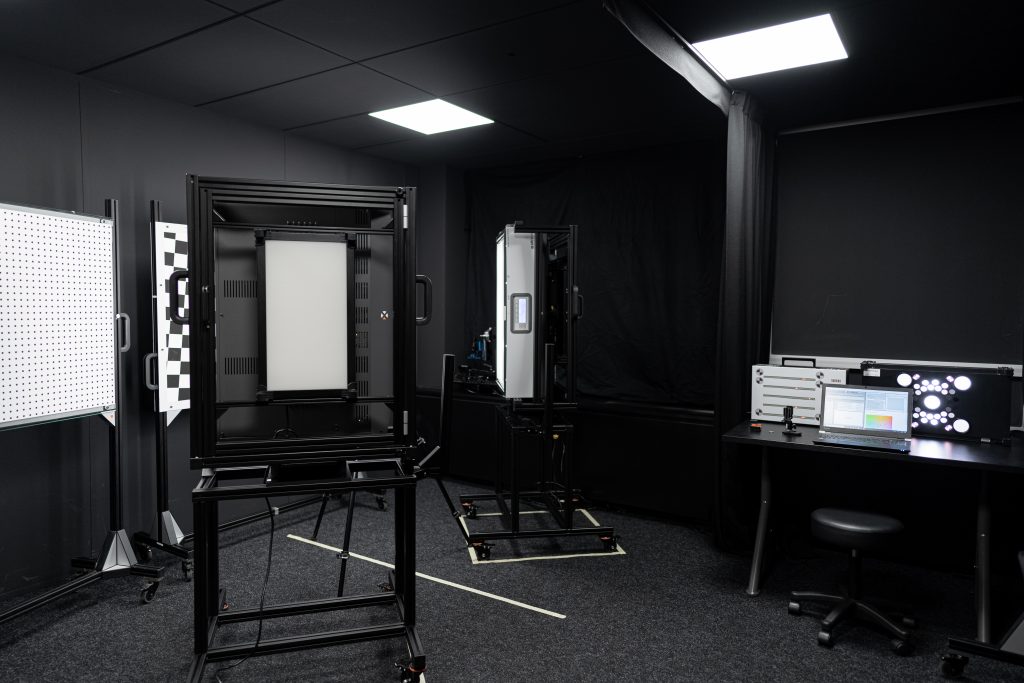
With the protocol in place, the reference camera system undergoes full evaluation under controlled lab conditions. Measurements cover the KPI set defined in phase 1, producing initial RAW and RGB analysis reports that establish a quantified performance baseline.
This phase surfaces hardware constraints and software limitations early (before tuning begins) so that target KPIs are grounded in what the platform can actually deliver rather than arbitrary benchmarks. The result is a documented target specification: realistic, measurable, and tied directly to the test protocol.
The core tuning phase runs as an iterative, instrumented loop. Captured datasets feed into ISP processing via the platform driver, and Camera Analyzer measures output quality at each iteration against the target KPI set. This closes the feedback loop with objective data rather than visual inspection.
Each cycle delivers intermediate results (DXOMARK standard charts and per-KPI tracking reports), so your engineering team has full visibility into where the pipeline is converging and where rework is needed. Parameter refinement is traceable, not empirical guesswork. The process is compatible with any major ISP platform software environment.
Once the tuned pipeline is integrated into the production build, DXOMARK performs lab sanity checks against the original test protocol to confirm that integration has not introduced regression. Results are validated against the target KPIs established in phase 2. Where divergence is identified, root cause analysis is conducted, and (when the issue extends to third-party components or platform-level constraints) escalation paths to the relevant parties are clearly defined.
The deliverable is a validation report that gives your team and your customers a documented, objective record of camera performance at shipping state.
Other ISP tuning service providers bring platform engineering expertise. DXOMARK brings that plus the measurement layer. Our KPI definitions, test scenes, lab conditions, and scoring methodology are the same ones used to evaluate and rank cameras from Apple, Samsung, Google, and every major smartphone OEM. When your ISP is tuned against DXOMARK protocols, the results are directly comparable to industry reference points, a level of credibility no platform integrator can replicate.
This matters in commercial conversations. A camera module supplier or OEM development team that can show DXOMARK-validated performance data enters specification discussions from a different position than one presenting internal test results alone.
DXOMARK ISP Tuning Services are designed for camera module suppliers, OEMs, and automotive camera developers,… who are operating on a fixed development timeline and need measurable progress at each phase gate. The service is particularly well-suited to teams introducing a new sensor or ISP platform, integrating a camera subsystem sourced from a third-party supplier, or preparing for a competitive benchmarking evaluation.
| Expertise | Camera |
|---|---|
| Service Type | Custom testing, Testing & Benchmarking |
| Industry | Smartphone, Automotive, 3D cameras, AR/VR, Computing, Drones / Action cameras, DSLR & Lens, Industrial Vision, Medical, Security |