
 Camera
  Display
  Battery
  Smartphone
  Security
  DSLR & Mirrorless
  Tv Screens
  Automotive
  Medical
  3D Camera
  Industrial Vision
  Computing
  AR / VR
  Drone & Action camera

Key Trends in Smartphone Imaging: AI and End-to-End Optimization for OEMs
Smartphone imaging continues to evolve, with steady progress observed across photo, video, and display performance. While improvements remain visible year after year, the drivers of innovation are shifting, with fewer gains coming from hardware alone and more from system-level optimization.
This article highlights key insights identified during DXOMARK’s recent webinar in collaboration with Counterpoint Research and ams OSRAM. It focuses on selected trends and challenges shaping smartphone imaging today.
For a deeper dive, more insights & the full webinar recording are available below.
The shift toward system-driven smartphone imaging
Recent insights from Counterpoint Research show that smartphone camera development is increasingly influenced by Bill of Materials (BOM) constraints, supply chain pressure, and system integration complexity. At the same time, Camera Image Sensor (CIS) size expansion historically a key driver of image quality is approaching physical limits within smartphone form factors, as further increases impact battery capacity and internal design.
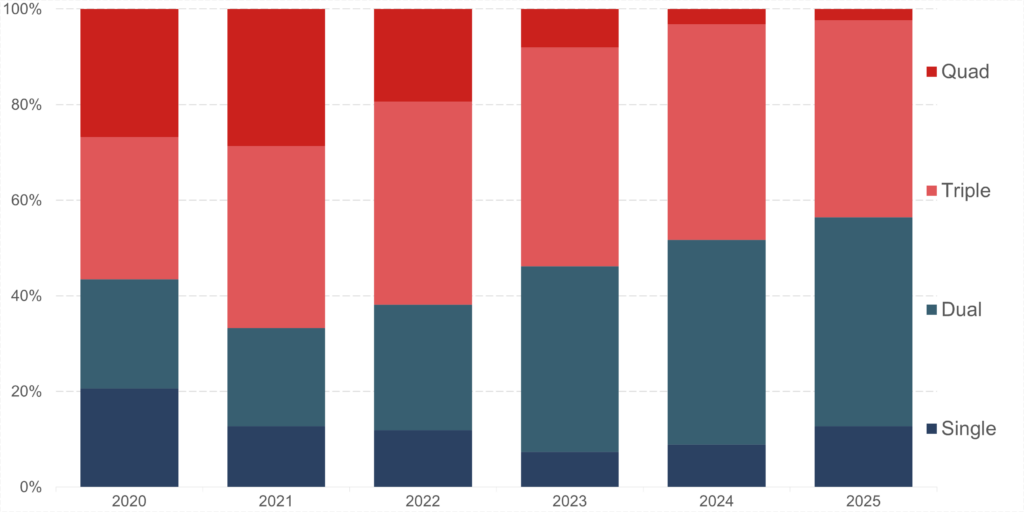
Primary/Rear Camera Count Distribution of Global Smartphone Sales – Counterpoint Research
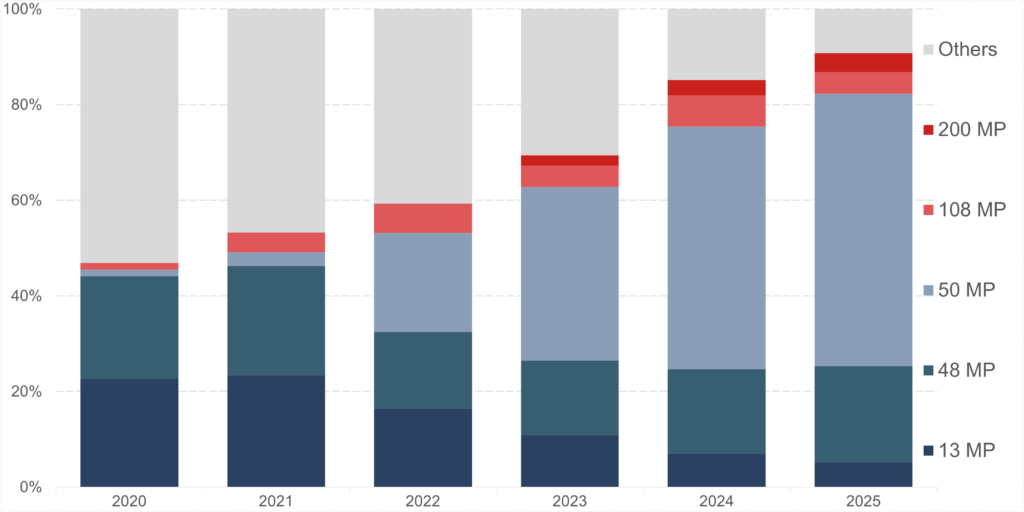
Primary/Rear Camera Megapixels Distribution of Global Smartphone Sales – Counterpoint Research
As a result, OEM strategies are evolving toward more balanced approaches:
-
- Optimization of existing hardware (sensor architecture, optics, LOFIC – Lateral Overflow Integration Capacitor)
- Selective hardware investment depending on product tier
- Increased reliance on computational photography and artificial intelligence (AI)
- Development of differentiated rendering styles and brand signatures
- Stronger focus on specific user scenarios (low light, HDR, zoom, video)
Imaging performance is no longer driven by specifications alone, but by how effectively the full system is tuned.
Hardware innovation beyond specifications
Over recent years, flagship devices have significantly improved Light Collection Capacity (LCC), which reflects the ability of a camera system to capture light by combining sensor size, pixel design, and optical characteristics.
While LCC improvements increase hardware potential, they do not directly guarantee better image quality. Real-world performance depends on how sensor data is processed, enhanced, and rendered.
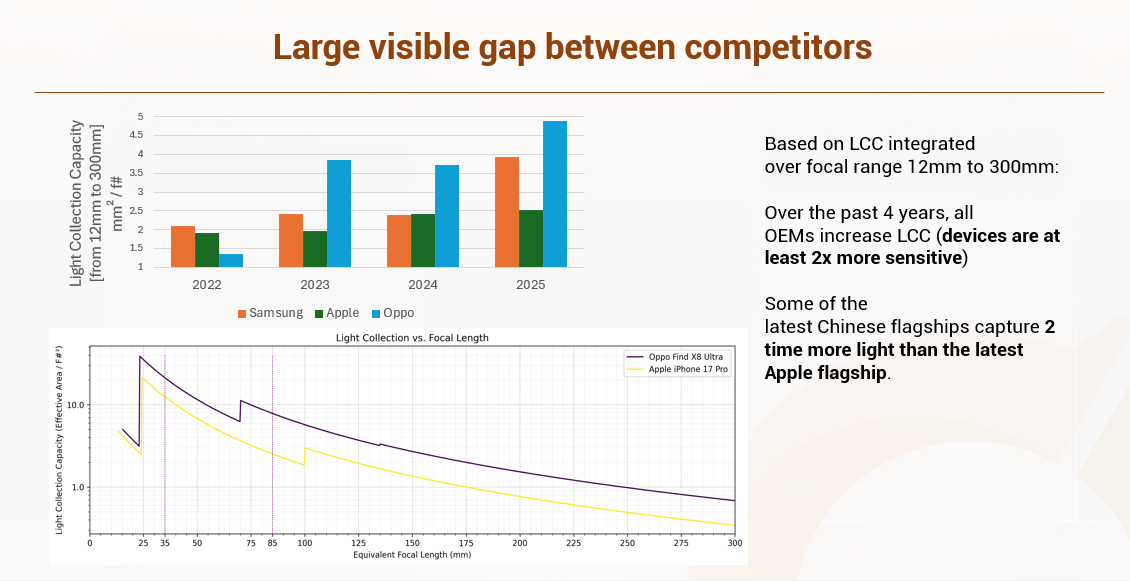
This reinforces a key industry shift: hardware defines the potential, but image quality is determined by system-level optimization.
AI and computational imaging as core performance enablers
Artificial intelligence (AI) is now deeply integrated across the imaging pipeline, supporting scene recognition, multi-frame fusion, denoising, detail reconstruction, and rendering optimization.
As AI becomes central to image processing, the challenge is no longer simply to enhance images, but to ensure that enhancement remains perceptually natural.
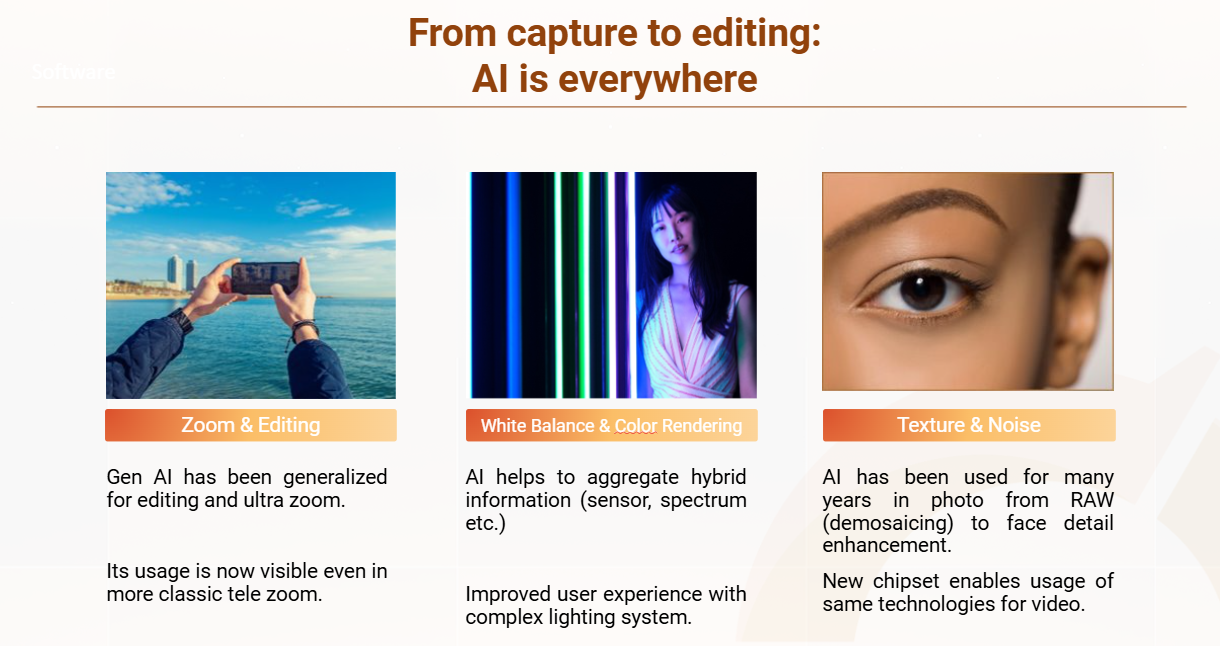
The objective is no longer simply to maximize enhancement, but to ensure that AI-driven processing improves perceptual image quality while preserving natural rendering and visual authenticity. In practice, overly aggressive algorithms can introduce a range of undesirable artifacts, including:
-
- Over-processing and excessive sharpening, leading to unnatural edge enhancement
- Artificial textures or detail hallucination, reducing scene fidelity
- Inconsistent rendering across scenes, impacting user trust in image output
These effects can significantly degrade user perception, even when traditional objective metrics suggest improved performance.
As a result, OEMs must carefully balance algorithmic enhancement strength with perceptual realism across a wide range of use cases. This requires not only fine-tuning individual AI models, but also managing their interactions within the broader imaging pipeline to ensure stable, consistent, and visually coherent results. Achieving this balance is becoming a key differentiator in delivering high-quality, user-centric imaging experiences.
Maintaining imaging consistency across use cases
One of the most persistent challenges in smartphone imaging is delivering consistent performance across a wide range of real-world and often conflicting shooting scenarios. Users expect reliable, high-quality results regardless of context whether capturing low-light portraits, high dynamic range backlit scenes, long-range zoom, or dynamic video sequences.
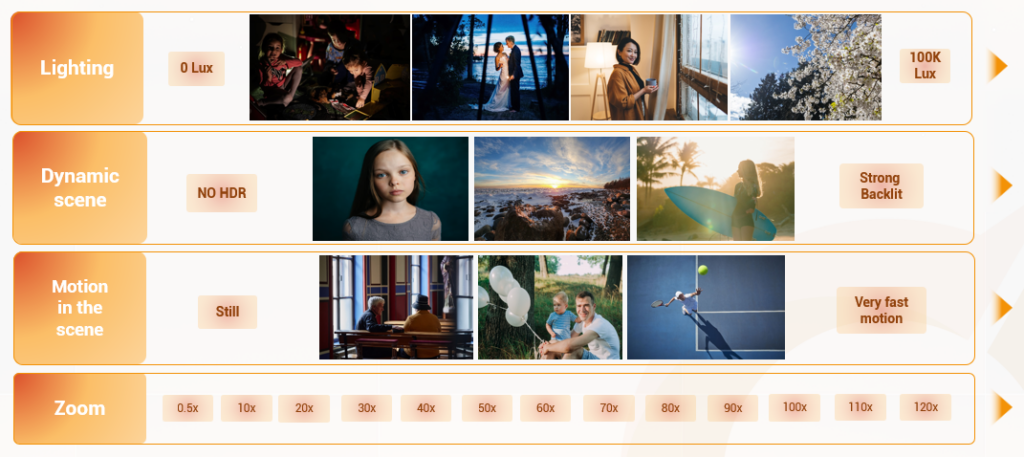
To meet these expectations, OEMs must simultaneously optimize across several critical domains:
-
- Exposure and dynamic range management: ensuring accurate brightness while preserving highlight and shadow detail
- Noise reduction and texture preservation: maintaining a balance between clean images and natural detail rendering
- Autofocus and motion tracking: delivering fast, stable, and reliable subject tracking in both photo and video
- Zoom reconstruction and sharpening: preserving detail across focal lengths without introducing artifacts
- Temporal consistency in video: avoiding flicker, instability, or frame-to-frame variations
- Display rendering and perceptual adaptation: ensuring that final output remains consistent with user expectations across viewing conditions
Beyond optimizing each of these components individually, a key challenge lies in managing their interdependencies. Adjustments in one area such as noise reduction or tone mapping can have direct and sometimes unintended effects on other aspects of image quality.
Key technical challenges in photo performance
Still photography requires balancing brightness, noise, and detail. In low light, increasing exposure improves visibility but amplifies noise, while denoising can reduce texture.
Backlit and HDR scenes introduce additional complexity. Devices must preserve highlight and shadow information while ensuring that key subjects especially faces remain properly exposed.
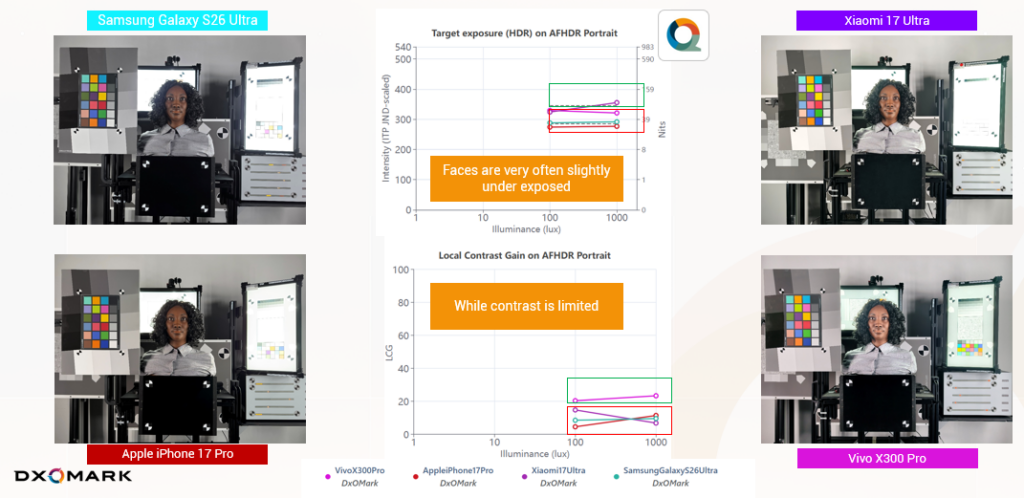
Based on DXOMARK’s insights derived from user perception, backlit portrait rendering remains a key area of high user dissatisfaction in smartphone photography. In these challenging scenarios, users consistently expect faces to be clearly visible and well-exposed, even when strong light sources are present in the background. However, many devices still prioritize highlight preservation at the expense of subject visibility, resulting in underexposed faces and images that are perceived as unusable or not suitable for sharing.
Conversely, devices that achieve a better balance between subject brightness and background retention tend to generate significantly higher user preference.
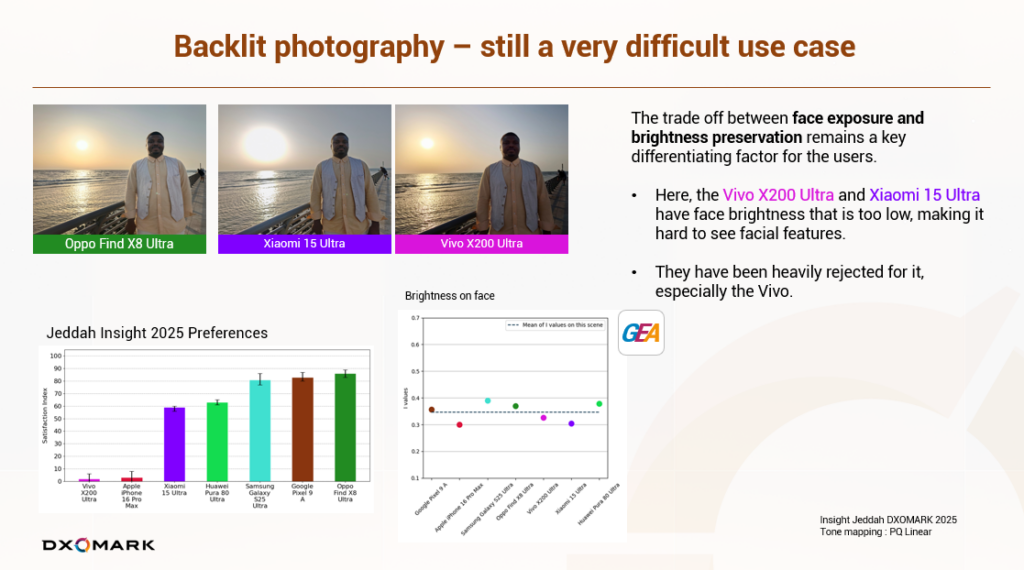
To support optimization in these scenarios, DXOMARK provides dedicated solutions such as All-in-One Portrait Testing, enabling OEMs to replicate challenging real-world backlit conditions and quantify performance trade-offs between subject exposure and background preservation.
Key technical challenges in zoom performance
Zoom performance is inherently constrained by the physical limitations of camera systems. As focal length increases, the amount of light captured by the sensor decreases significantly, reducing the available image information and making it more difficult to maintain high image quality.
This creates two major challenges:
-
- Ensuring perceptual consistency across transitions between camera modules and focal lengths
- Preserving detail and image fidelity at high zoom ratios where optical information becomes limited
At longer focal lengths, OEMs increasingly rely on computational enhancement and AI-based reconstruction to compensate for the lack of optical data. However, these techniques must be carefully controlled to avoid artifacts such as over-sharpening, texture inconsistencies, or unnatural rendering.
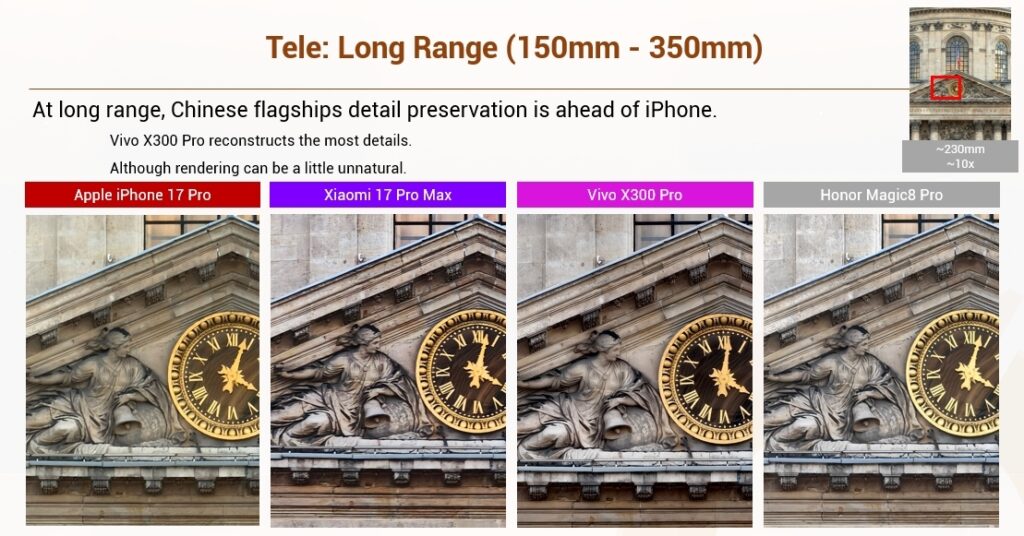
As a result, achieving high-quality zoom performance requires a carefully balanced approach that combines optical design optimization, sensor-level performance, and controlled computational enhancement, ensuring that improvements in detail do not come at the expense of perceptual realism or cross-zoom consistency.
DXOMARK’s Camera Protocol Automation solutions enable OEMs to systematically assess image quality across zoom ratios, ensuring consistent measurement of detail preservation, exposure, and rendering behavior from wide to extreme telephoto. This approach helps identify performance gaps between modules and optimize zoom transitions with greater efficiency and reliability.
Key technical challenges in video performance
Video represents one of the most demanding use cases in smartphone imaging, as all processing must be performed continuously and in real time while adapting to changing scene conditions. Unlike still photography, video requires the imaging pipeline to maintain stability over time, making inconsistencies immediately visible to users.
This introduces several key challenges:
-
- Maintaining stable exposure without visible flicker
- Ensuring consistent color rendering across varying lighting conditions
- Delivering reliable autofocus tracking during motion
- Providing effective motion stabilization
- Preserving temporal consistency across frames
Despite significant hardware improvements across the industry, stronger specifications do not always translate into better video quality. Some devices with advanced sensors and optics still underperform compared to those with more optimized processing pipelines.
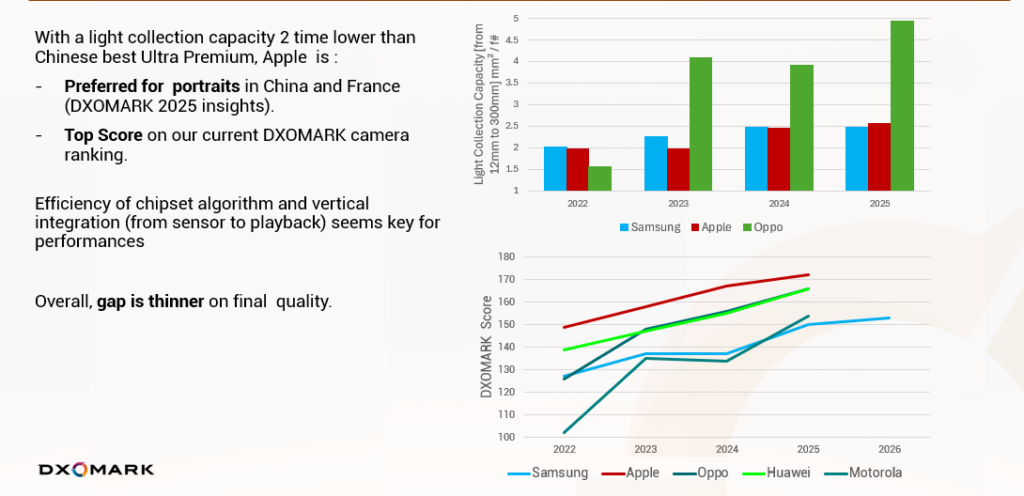
This gap becomes particularly visible in flagship comparisons, where Apple continues to lead in overall video consistency and user experience, despite other manufacturers often introducing more aggressive hardware configurations on paper. The key differentiator lies in the strength of its end-to-end video pipeline, including exposure management, color tuning, autofocus behavior, and motion rendering stability.
These observations reinforce a broader industry conclusion: video quality is primarily determined by system-level optimization rather than isolated hardware components. Successful video performance requires tight integration between sensor output, ISP processing, stabilization systems, and computational algorithms to ensure coherent and stable rendering across time. Video quality is highly dependent on temporal consistency and perceptual stability, which cannot be fully assessed through objective measurements alone.
DXOMARK combines Insights qualitative studies to capture real user perception with advanced camera protocol automation tools to ensure consistent and scalable evaluation of video performance across devices. This dual approach enables OEMs to better understand user expectations while accelerating optimization of exposure, color consistency, autofocus, and motion rendering.
End-to-End optimization for glass-to-glass pipelines
As smartphone imaging systems evolve, display performance has become a critical component of overall image quality. While significant progress has been made in brightness, color accuracy, and HDR capabilities, the display is no longer just an output interface it is an integral part of the imaging pipeline that directly impacts final user perception. OEMs must therefore ensure that what is captured by the camera is accurately reproduced on screen across a wide range of real-world viewing conditions.
One of the most critical challenges lies in outdoor readability and screen reflectance. In high ambient light environments, perceived contrast is significantly reduced due to reflections on the display surface, making images appear washed out or lacking detail. Increasing peak brightness can partially compensate for this effect, but it introduces trade-offs in power consumption and thermal constraints. As a result, brightness alone is not sufficient. OEMs must carefully balance reflectance reduction, contrast management, and display tuning to maintain consistent visibility and image quality in challenging lighting conditions.
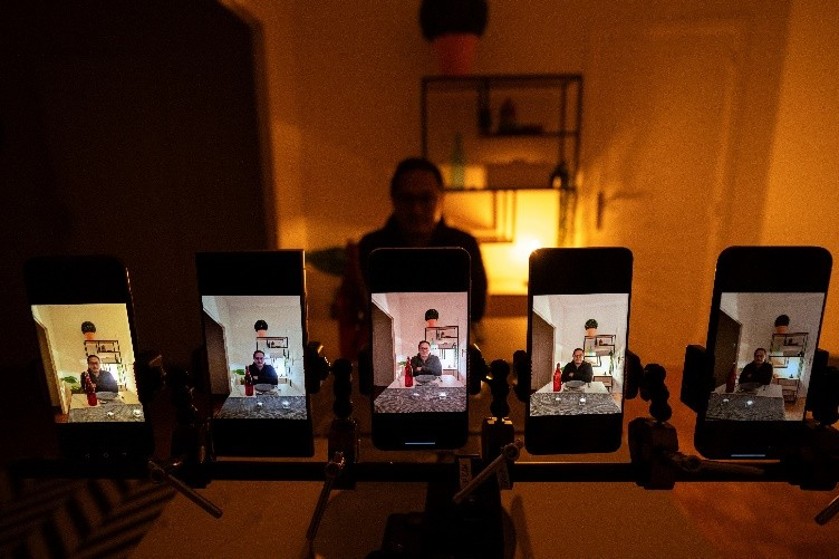

These constraints are driving a shift toward more integrated imaging strategies. The concept of glass-to-glass (G2G) refers to the full imaging pipeline, from light capture through the camera system to final rendering on the display. Instead of optimizing each stage independently, OEMs are increasingly aligning capture, processing, and display behavior to ensure consistency between the captured scene and the final on-screen result.
-
- Glass-to-glass (G2G) refers to the complete imaging pipeline from the moment light enters the camera lens to the moment the final image is displayed on the device screen. It encompasses capture through the Camera Image Sensor (CIS), image processing via the Image Signal Processor (ISP) and computational algorithms, and final rendering on the display.
Understanding how images are ultimately perceived by users requires going beyond capture performance and analyzing the full experience from camera to display.
DXOMARK Insights qualitative studies combine scientific evaluation with real user feedback to identify perceptual gaps between captured content and on-screen rendering, helping OEMs optimize brightness, color, and contrast for real-world viewing conditions.